
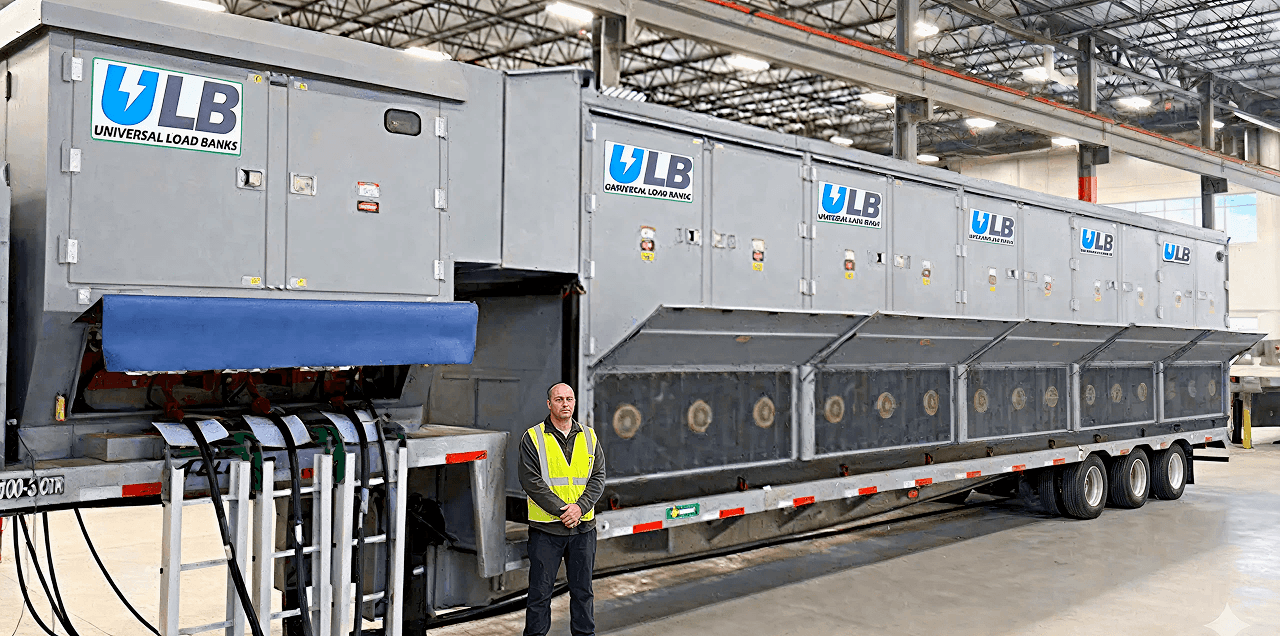
How ULB Simulates and Stabilizes AI Load Behavior
- Up to 20 MW testing capacity, including specialized >10 MW systems for hyperscale and prime power applications
- Designed for ORV3 / ORV4 architectures
- Supports diesel backup, gas turbine generators (GTG), and emerging prime power systems such as small modular reactors (SMR)
Modern data centers depend on electrical infrastructure that must perform reliably under extreme and rapidly changing loads.
ULB load bank systems allow operators to validate generators, UPS infrastructure, and distribution systems under controlled conditions—both during commissioning and as part of ongoing power validation in live environments.
Key Capabilities for Data Center Power Validation
ULB load bank systems support commissioning, validation, and operational testing of modern data center power infrastructure.
- Testing capacity up to 20 MW through synchronized multi-bank systems, with scalable architectures supporting >10 MW hyperscale deployments and extended capacity to 100+ MW
- Support for diesel generators, gas turbine generators (GTG), and emerging SMR-based prime power systems
- Validation of UPS, ATS, and PDU infrastructure under electrical load
- Simulation of rapid load ramps associated with AI compute clusters
- Stabilization of generators operating near minimum stable operating load (MSOL)
- Configurations available as portable, trailer-mounted, or permanent systems
AI-Driven Power Fluctuations
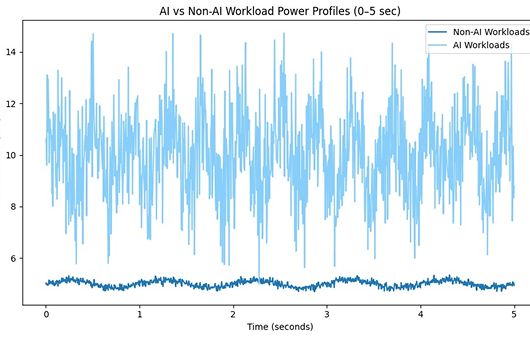
AI workloads are fundamentally reshaping data center power behavior.
Unlike traditional IT loads that scale gradually, GPU-based clusters can transition from idle to full load within seconds. At the same time, rack densities are increasing to 80–120 kW and beyond, while cooling systems introduce delayed and asynchronous power demand.
These conditions create highly dynamic electrical profiles characterized by:
- Rapid step-load changes and sharp load ramps
- High instantaneous current draw at rack and pod levels
- Multi-megawatt load swings within seconds
- Decoupled compute and cooling power dynamics
Compounding this challenge, grid interconnection timelines often extend 3–7 years, driving increased reliance on onsite generation such as gas turbines and large reciprocating engines.
How ULB Simulates and Stabilizes AI Load Behavior
ULB load banks replicate AI-like load behavior before deployment, enabling controlled simulation of rapid ramps, transient spikes, and sustained high-density demand.
They also act as a buffer, absorbing short-duration (1–5 sec) fluctuations to stabilize load, maintain generator performance, and prevent voltage excursions.
Power Validation for AI and Next-Generation Architectures
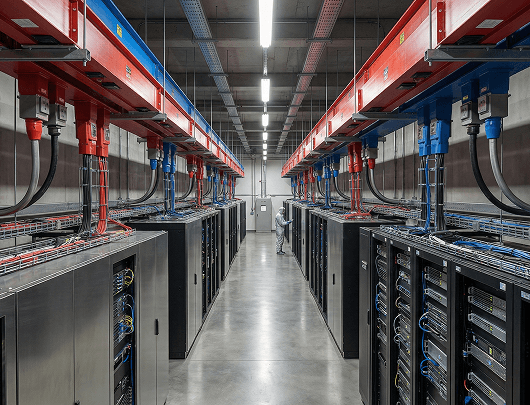
Traditional commissioning methods are no longer sufficient for AI-driven environments.
The speed, scale, and variability of modern loads require validation under conditions that closely replicate real-world operation.
Without proper validation, these dynamics can lead to:
- Voltage instability and frequency excursions
- Nuisance trips across UPS, breakers, and protection systems
- Generator hunting and unstable control response
- Long-term equipment stress and reduced asset life
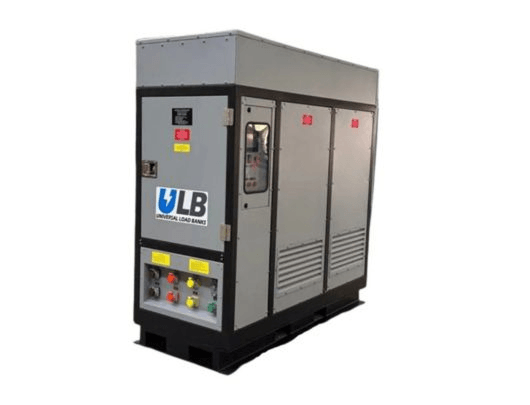
With the transition from ORV3 to ORV4 architectures, validation requirements have intensified:
- Higher rack densities and faster GPU ramp rates
- Liquid cooling systems with independent load behavior
- Complex interactions between compute and cooling power
How ULB Supports Modern Data Center Power Systems
ULB supports these environments with advanced air-cooled and liquid-cooled load bank systems, including high-voltage AC and up to 800 VDC configurations, enabling precise simulation of modern data center loads.
Key validation capabilities include:
- Generator transient response and MSOL verification
- UPS and PDU stability under dynamic conditions
- Automatic transfer switch (ATS) coordination
- Prime power system control and stability tuning
Data Center Applications
ULB Load Banks High & Medium-Voltage for Prime Power – GTG / NGG / SMR 20 MW | 13.8 kV / 35 kV
ULB Load Banks – Diesel Back-Up Systems Up to 6 MW | 480 V | Generator Applications
ULB Load Banks – Electrical Room Applications AC + DC Systems | Switchgear / UPS / Distribution Validation
ULB Load Banks – IT Load / White Space AC + DC | Air & Liquid-Cooled | AI-Ready Load Emulation
LoadEz Software from ULB
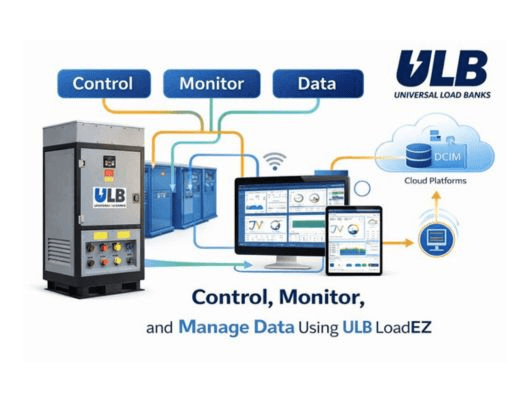
Seamless Load Bank Monitoring, Network Control & DCIM Integration
- Automatic voltage detection & tap selection (208V–480V) with unified MV/LV control (13.8kV + 480V)
- Scalable network architecture — 250+ load banks daisy-chained with live add capability (no power cycle required)
- Control of mixed load bank fleets (air-cooled & liquid-cooled), grouped by type and quantity
- 30,000+ programmable load profiles with historical trend monitoring
- Real-time alarms, blower monitoring & comprehensive data logging
- Ethernet / WiFi connectivity with seamless DCIM / BMS / SCADA integration
Engineering Support and System Design
ULB collaborates with engineering and commissioning teams to design load bank systems that integrate with each facility’s electrical architecture and operational requirements.

Support may include:
- Load bank sizing and configuration planning
- Multi-bank synchronization strategies
- Integration with generator and prime power systems
- On-site commissioning support
Why Chose Universal Load Bank
ULB delivers more than load bank—it delivers confidence, scalability, and protection for mission-critical power systems.
Deep application expertise, not just equipment sales
ULB brings engineering-level understanding of generators, UPS systems, prime power, and data-center operations—helping customers design the right solution, not just buy hardware.
Built for real-world operation, not just testing
ULB load banks are designed for continuous-duty and permanent installations, supporting commissioning, MSOL control, and ongoing operations—not just short-term rentals.
Scalable and flexible from kW to 100+ MW
A single platform spanning compact, portable, trailer-mounted, stationary, and permanent containerized systems—growing seamlessly from small tests to campus-scale deployments.
24×7 Support. Parts Ready. Warranty You Can Trust.
Round-the-clock technical support, readily available spare parts, and a robust warranty ensure maximum uptime and long-term confidence.